

How Should You Approach a Dock When Wind or Current Is Pushing You Away? Safe Docking Techniques Explained

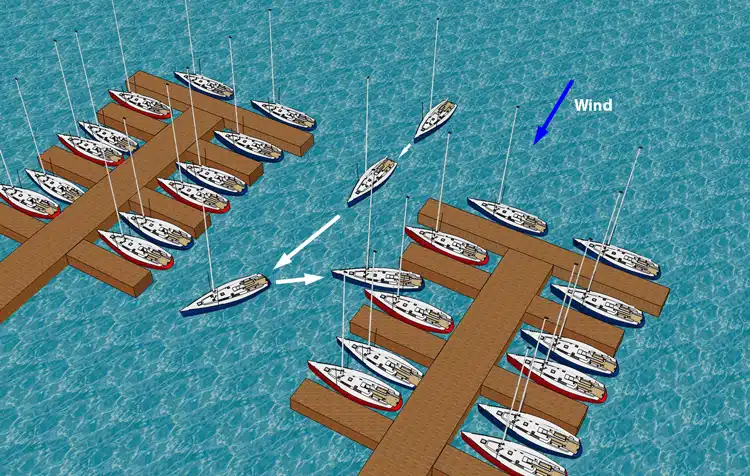
In cases where your boat is blown off the dock by the wind or the current, then the normal forward maneuvers will not work, so the propulse will never be sufficient to overcome the crossways drift. Rather, ferry glide: turn the force at 30-45 degrees without stopping forward throttle or rudder/helm. This push is countered and a sideways momentum towards your target is created. Practice makes one accurate; abort and re-circle in case of loss of control.
Ferry Glide Technique: Core Mechanics
Go out at idle speed, bow facing 30-40 o out of dock in the wind/current. Add gradual forward throttle (1/4-1/2 power); turn violently toward dock. Sideways movement of boat “crabs” with forward movement- change angle all the time to curve beautifully. Last 10 feet: short reverse bursts test speed, make parallel. Pivot control with bowline Crew loops first.
Wind Direction Strategies
Wind behind (down wind dock): Worst scenario- use reverse approach. Astern dock stern-first at right angles, helm off dock. Wind increases the drift; forward throttle intermittent acceleration accelerates. Swing -port turn starboard prop is assisted by reverse prop walk. Bow in once stern secures hauled at docklines.
Wind across beam: Fill up ferry glide on upwind side. Downwind docks require late pivot: turn on and go parallel 20 feet out, you can hardly stop. Boat pulled sideways with spring line.
Positioning and Crew Roles
Allocate bow line(forward) and stern (aft) deckhand. Fenders deployed midships. Captain: Starboard dock, throttle forward, ferry. Verbal orders make chaos absent. Single-handers are looped around with centerline spring line around dock piling- throttle forward pulls with magically stern.
Engine and Prop Considerations
Outboards: tilt up in entering shallow, counter prop walk (left in right). Inboards: pivot based on direction of the prop–plan swing based on the same. Twin screws make it easier: differential throttle (port astern, starboard ahead) moves sideways with precision. Thrusters perfect yet untrustworthy–handbook first.
Common Mistakes to Avoid
Low speed disables control- steerage way to minimum 3-4 knots. Oversteering causes fisktailing; minor changes prevail. Disregard of the change of tides in the middle of a manoeuvre capsizes boats. Rail leaning over—sit down.
Undocking Protocols
Reverse procedure: departure with wind/current away. Spring line: swing stern away: forward throttle, helm to dock, free bow line last. Down wind takeoffs require power on demand.
Practice Drills and Safety
Peaceful days, first: draw marks that represent docks. Windy marinas are ideal training fields. KS (kick start) on, kill switch off. VHF monitoring eliminates collisions. Experience is better than theory- marina employees unveil secrets.
Legal Responsibilities
The USCG Rules provide safe speeds, yielding, sound signals. Docklines that are able to support the weight of vessels are required by state laws. The liability of collusion is on the loss of control.
Advanced Maneuvers
Twin-engine pivot turns: one in advance, one astern. Bow / stern thrusters back up in winds greater than 15 knots. Drill “wind shadow” docking- adopt buildings against the wind.
Learning to cope with the negative environment turns docking fear into assurance. Ferry glide overcomes physics; preparation panics overcome. Harmless methods win marina admiration one arc at a time.


